Government Visitor Management: QR Entry, No App Needed
Quick Answer
Visitor management for government offices works when a citizen can scan a QR code at the gate or at home, book a time slot, and arrive against an appointment, with no app to download. AI visitor management then gives the office a live view of who is coming and when, replacing the crowd at the gate with a schedule. By Mr. Sumeet Katariya, Accucia Softwares Pvt. Ltd.
Why app-download visitor systems fail at a government gate
Plenty of visitor management products exist. Most of them quietly assume a corporate lobby: a trained receptionist, visitors who arrive a few at a time, and everyone comfortable installing an app because their meeting depends on it.
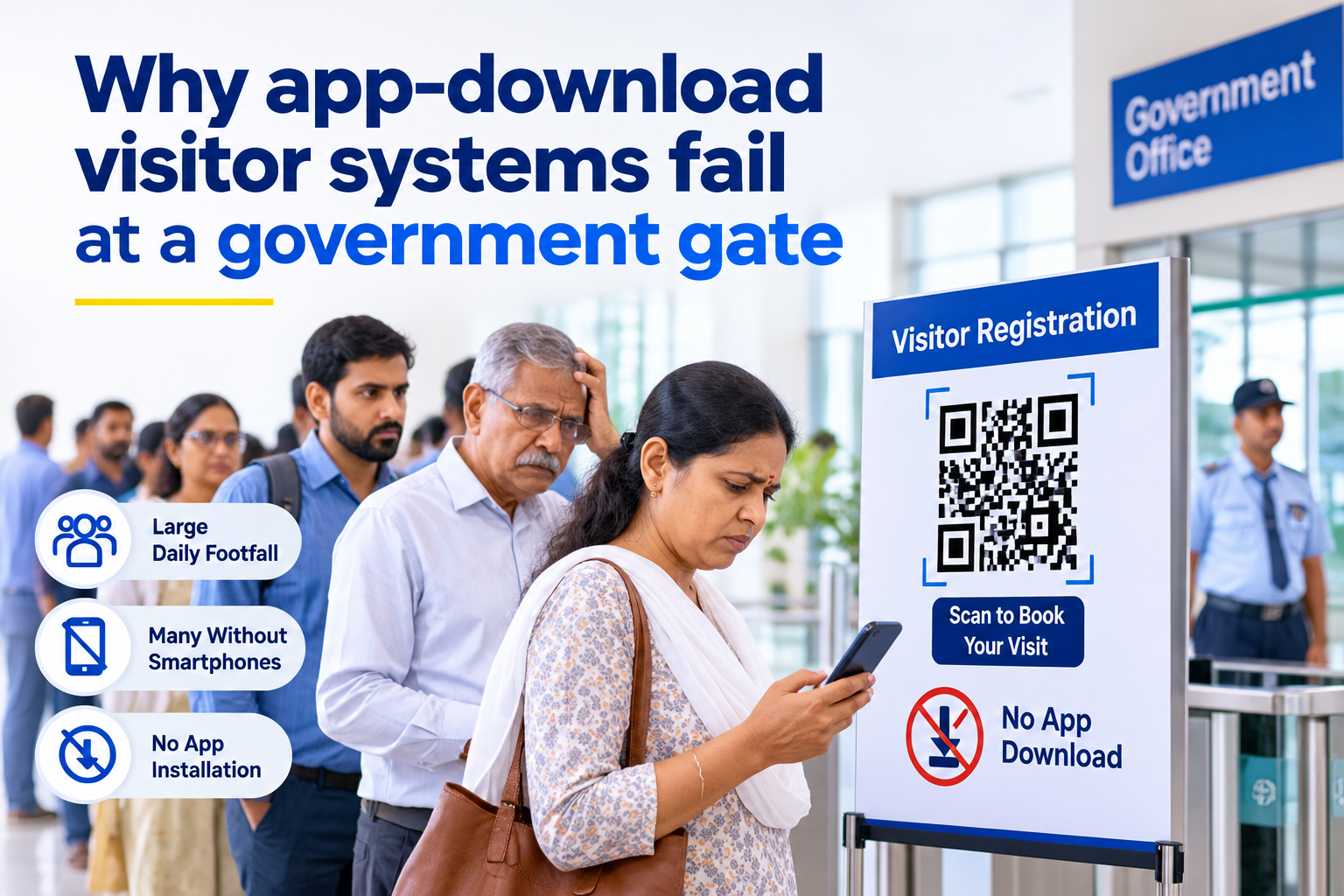
A government office gate is a different planet. Hundreds or thousands of citizens arrive in a day. Many are visiting for the first and only time. Some carry basic phones, some have no storage space left, some simply will not install an unfamiliar app to stand in a queue they have always stood in. Every install step loses a slice of the crowd, and the slice that is lost is usually the slice that most needed the service.
So the app-first system produces a familiar failure: a kiosk nobody uses, a download poster nobody scans twice, and the same crowd at the gate it was bought to disperse. Staff then run two processes at once, the new one for the few who installed the app and the old one for everyone else, which is more work than before the system arrived.
The design constraint for government visitor management is blunt. If it requires a citizen to install anything, it will not carry the volume. We hold our own visitor management system to that constraint.
QR appointments without an install: how it works end to end
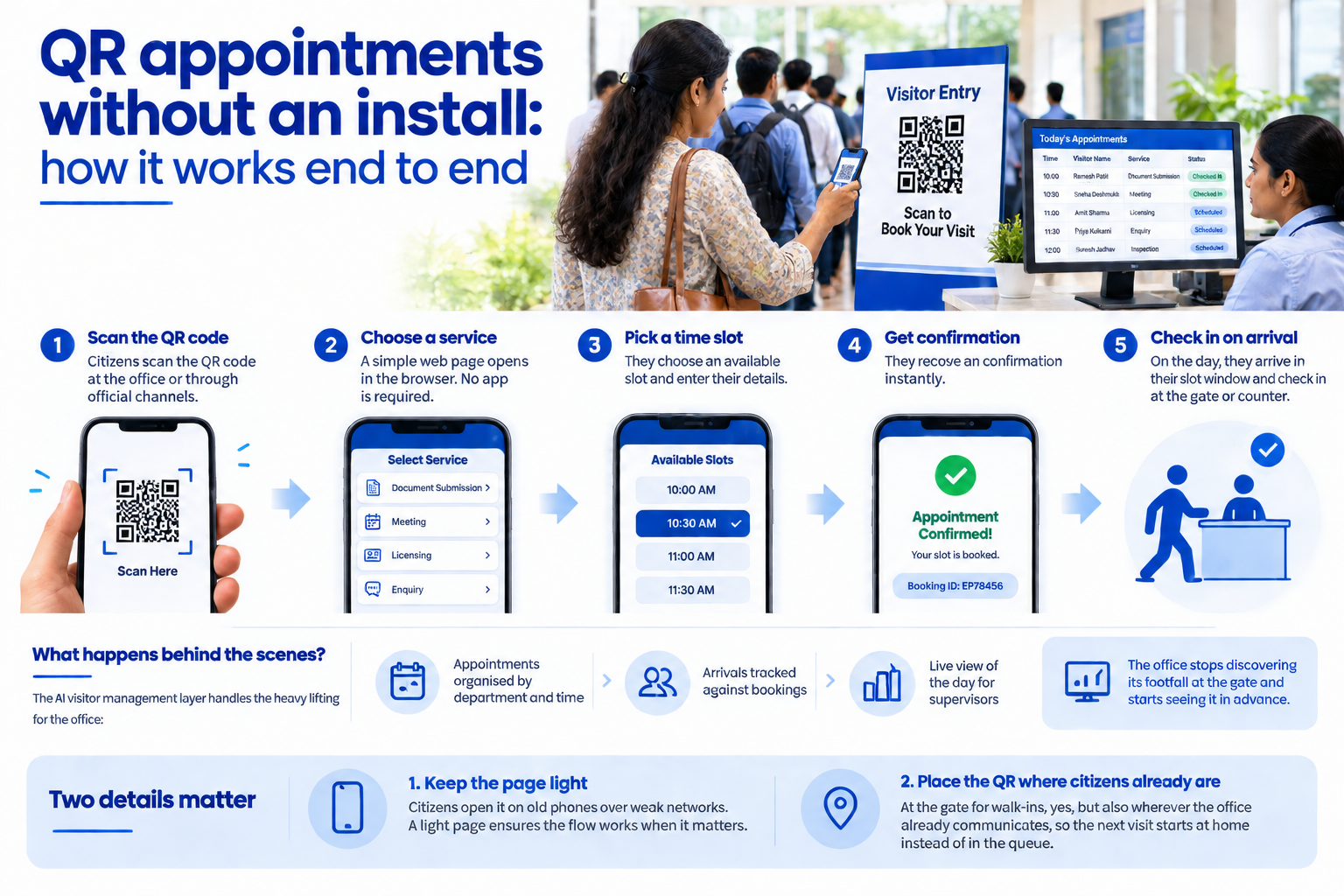
Strip out the app and the flow becomes simple enough to explain on a standee.
A citizen scans a QR code, either on a poster at the office or shared through the office's usual channels, and it opens a plain web page in the phone's browser. Nothing installs. They pick the service they need, pick an available time slot, enter their details, and receive a confirmation. That is the whole citizen journey: scan, pick a slot, done.
On the day, they arrive in their slot window and check in against the appointment instead of joining a general crowd. The person at the gate or counter sees a schedule, not a sea of faces.
Behind the page, the AI visitor management layer does the office-side work: appointments organised by department and time, arrivals tracked against bookings, and a live picture of the day that supervisors can actually read. The office stops discovering its footfall at the gate and starts seeing it in advance, which changes how counters are staffed and how days are planned. This is the kind of practical, unglamorous automation we build across our AI for government work.
Two details matter more than they look:
The browser page has to be light. Citizens open it on old phones over weak networks. Anything heavy breaks the promise at the exact moment it matters.
The QR has to live where citizens already are. At the gate for walk-ins, yes, but also wherever the office already communicates, so the next visit starts at home instead of in the queue.
The counter-staff problem: the real adoption barrier
Here is the part no brochure mentions. In our deployment with a government organization in Maharashtra, the hardest part was not the software. It was counter staff being willing to turn away a walk-in and book a slot instead.
Sit with that for a moment, because it is the whole game. A citizen is standing in front of the counter, right now, the way citizens always have. The new process asks the staff member to do something that feels rude and feels slower: not serve them immediately, but help them book a slot and come back at their time. Every instinct built over years of counter work pushes the other way. And if staff quietly keep serving walk-ins, the appointment system becomes decoration within a week, because word spreads that you do not actually need a slot.
Getting past this is process work, not software work. The counter teams needed a script for the conversation, backing from supervisors when a walk-in pushed back, and enough visible early wins, shorter queues, calmer halls, to believe the trade was worth it. The software's job was to make the alternative effortless: booking a slot for someone takes moments, and the citizen leaves with a confirmed time instead of a vague instruction.
Any vendor who talks only about features is selling you the easy half. Ask them how they handle the counter conversation. If the answer is a blank look, the rollout will stall at the gate no matter what the system can do.
What the data shows after rollout
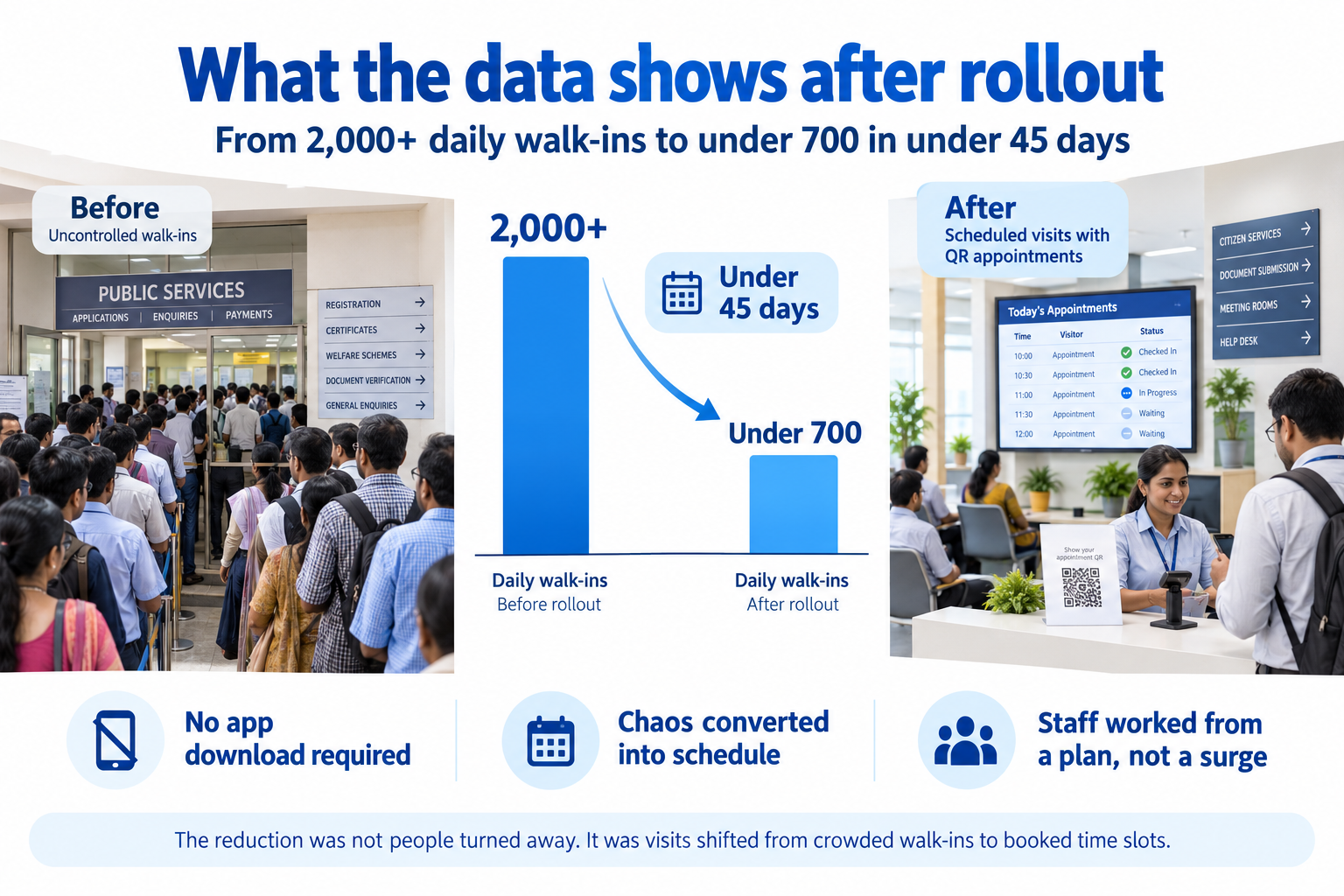
The figures from that deployment, kept anonymous as a matter of policy, are the clearest argument for the approach.
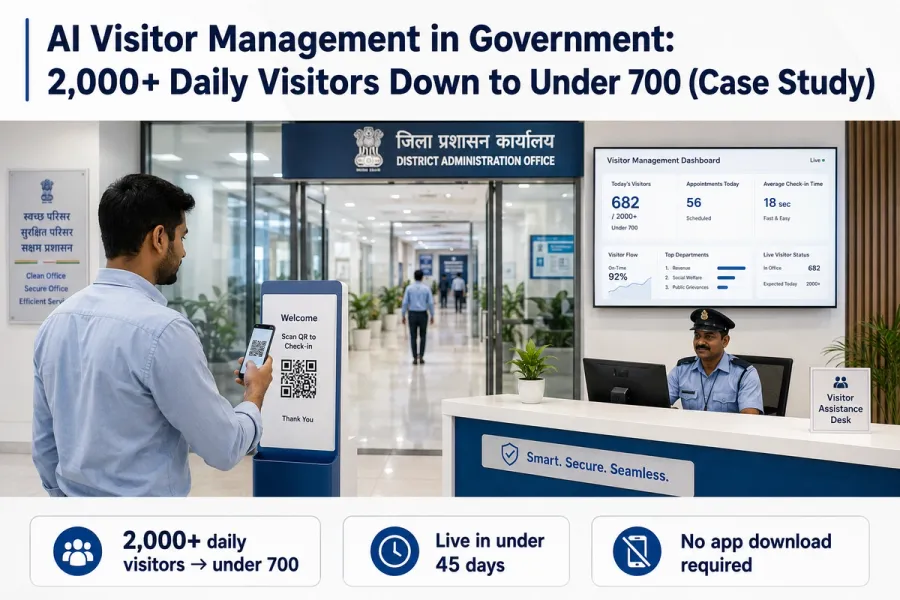
The office was handling daily footfall of 2,000+ people walking in. After the QR appointment system and AI visitor management went live, daily footfall came down to under 700, and it happened in under 45 days. No citizen downloaded an app to make that happen.
The reduction is not people turned away. It is chaos converted into schedule: visits that used to mean half a day in a crowd became a booked slot, and visits that did not need a counter at all stopped happening blind. The building got quieter, queues got shorter, and staff worked from a plan instead of a surge.
We have published the full account of that rollout separately, and we keep the client anonymous there too. What matters for anyone evaluating this: the drop happened within the first weeks, not after a year of behaviour change, because the no-install design removed the only step citizens ever refuse. Our broader government and public sector work follows the same pattern of building for the citizen who is actually at the gate, not an imagined smartphone power user.
Accucia's view
Visitor management for government offices is a process change wearing a software badge, and the install step is where most products disqualify themselves before the process conversation even starts. A QR code opening a plain browser page, backed by AI that turns bookings into a live operational picture, is the only shape we have seen survive real public footfall. Buy for the citizen with the old phone and the counter clerk with a queue in front of them. Everyone else is already easy.
If a crowd gathers at your office gate every morning, message us on WhatsApp or reach us through the contact page on accucia.com and we will show you the system live.
FAQ
Does a QR-based visitor management system require citizens to download an app?
No. The citizen scans a QR code and a web page opens directly in the phone's browser. They choose a service, pick an available time slot and receive a confirmation, with nothing installed. This matters at government offices, where requiring an install reliably excludes a large share of visitors.
How does AI visitor management help a government office?
It turns raw bookings into an operational picture. Appointments are organised by department and time, arrivals are tracked against bookings, and supervisors see the day in advance instead of discovering footfall at the gate. That lets the office plan counters and staffing around a schedule rather than reacting to a crowd.
What results has this approach produced in a real government deployment?
At a government organization in Maharashtra, daily footfall of 2,000+ walk-ins came down to under 700 in under 45 days of going live with QR appointments and AI visitor management. No app download was required at any point. The client remains anonymous as a matter of policy.
What is the hardest part of rolling out appointment-based entry?
The counter conversation. Staff must be willing to turn away a walk-in and book them a slot instead, which goes against years of habit. Successful rollouts treat this as process work, with scripts, supervisor backing and visible early wins, while the software makes booking a slot take only moments.
Book a Free AI Visitor Management Demo Today!