Case Study: Footfall 2,000+ to Under 700 in Under 45 Days
Quick Answer
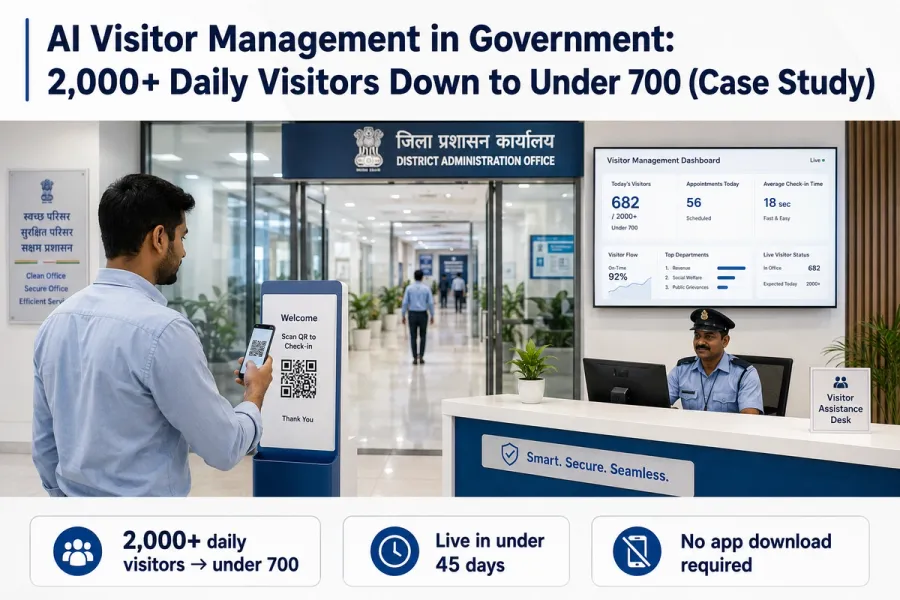
A government organization in Maharashtra was handling daily footfall of 2,000+ walk-ins. After deploying QR-based appointments with AI visitor management, requiring no app download from citizens, daily footfall fell to under 700. The change took under 45 days. The hardest part was not the software but counter staff learning to book walk-ins into slots. By Mr. Sumeet Katariya, Accucia Softwares Pvt. Ltd.
The situation: 2,000+ people a day, one building
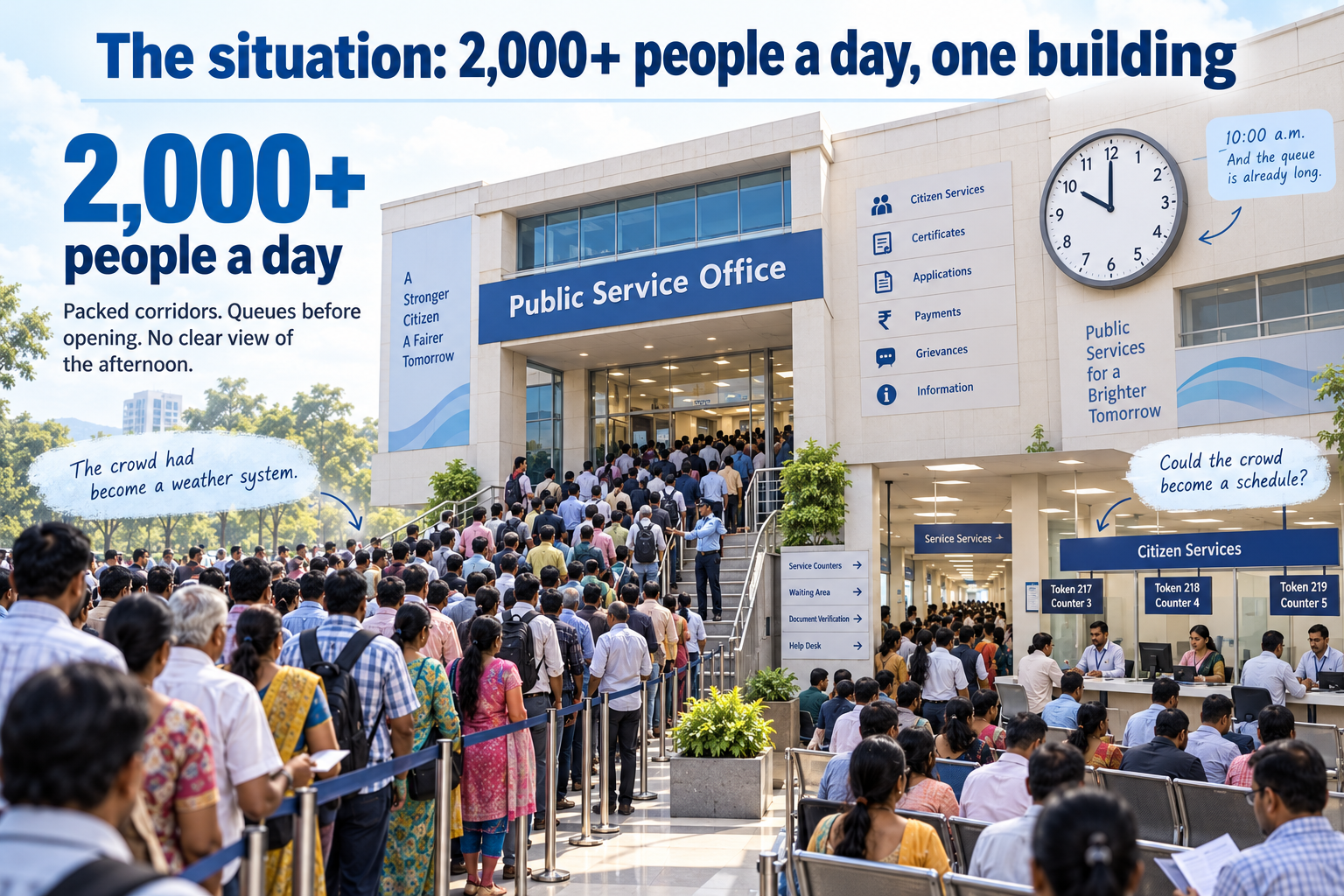
Two thousand people a day walked into one building. Some had work that needed a counter. Some were following up on something submitted weeks earlier. Some were there because being there in person felt like the only way to make anything move. All of them arrived whenever they arrived, which meant the building absorbed its entire day's demand as one continuous crowd.
The client is a government organization in Maharashtra. We keep it anonymous as a matter of policy, in this account and everywhere else, so that is as specific as we will get. What we can describe is the operating condition, because it will sound familiar to anyone who has run or visited a high-footfall public office: packed corridors, queues that formed before opening, staff reacting to whoever reached the counter next, and no one in the building able to say at 10 a.m. what the afternoon would look like.
Footfall of 2,000+ a day is not a service level. It is a weather system. The question the organization brought to us was whether the crowd could become a schedule.
What was built: QR appointments and AI visitor management, no app
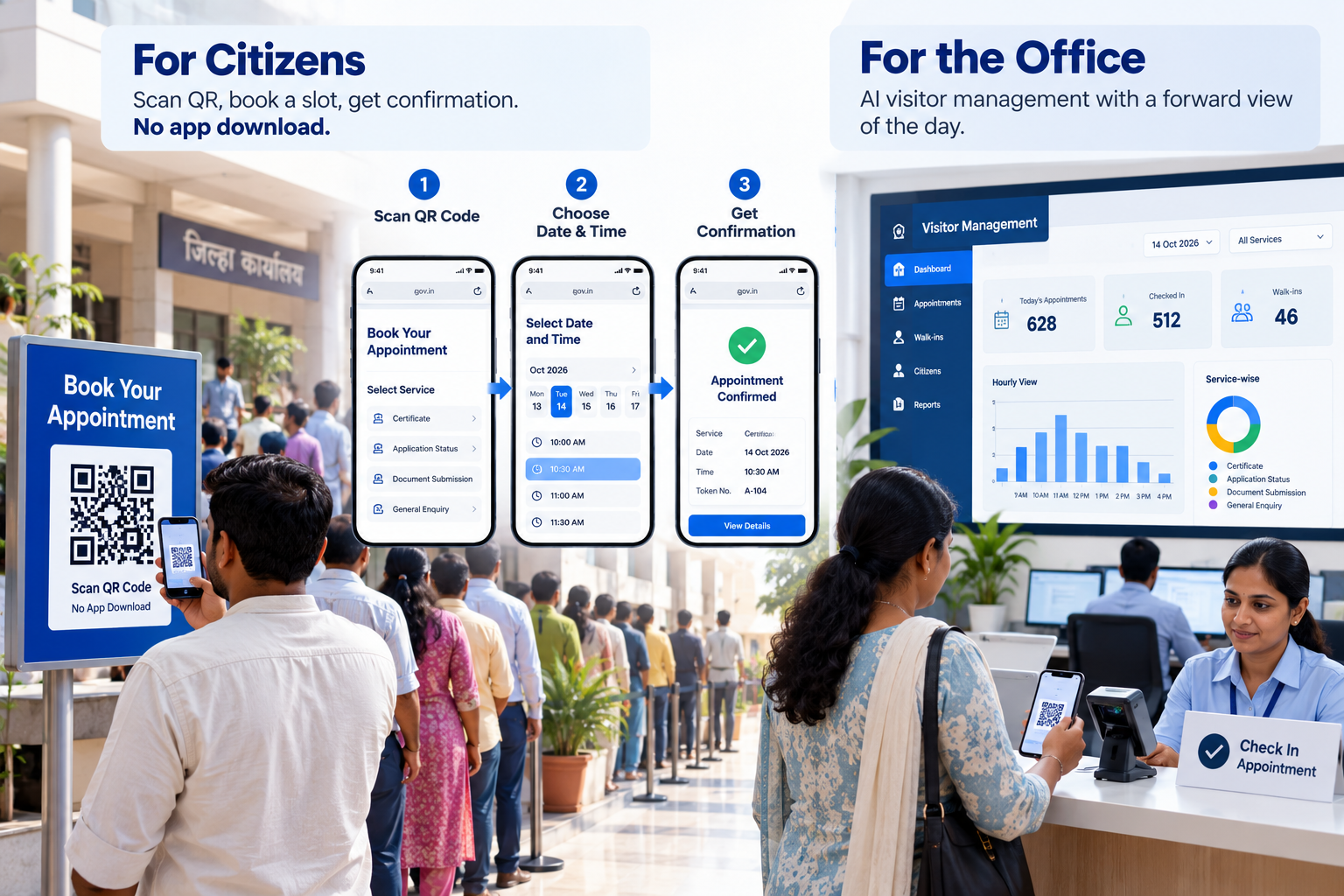
The deployment had two halves, one facing the citizen and one facing the office.
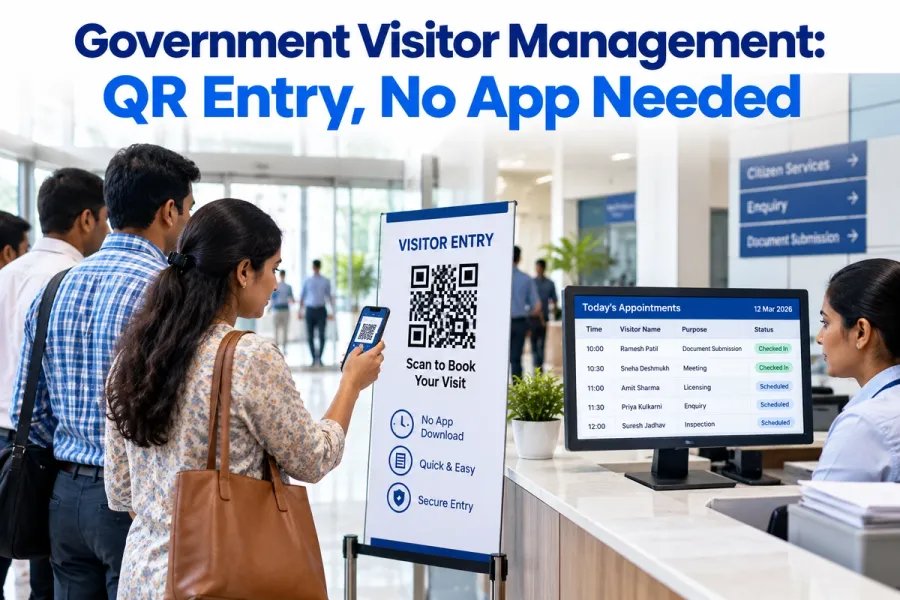
The citizen half is deliberately minimal. A QR code, scanned at the office or shared through the office's existing channels, opens a plain page in the phone's browser. The citizen picks the service, picks an available time slot, and gets a confirmation. No app download at any point. That constraint was non-negotiable from day one, because every install step sheds exactly the visitors a public office most needs to reach: first-time visitors, older citizens, people on basic phones and thin data plans.
The office half is the AI visitor management layer. Bookings organise themselves into a forward view of the day: who is expected, for which service, at which hour. Arrivals check in against appointments, so the gate and the counters work from a list rather than a crowd. Supervisors see demand before it reaches the building, which turns staffing from guesswork into planning.
This is the same product we offer as our visitor management system, and the deployment pattern follows the approach we take across our AI for government work: build for the citizen actually at the gate, keep the intelligence on the office side where it belongs.
The adoption fight: the counter is where rollouts live or die
Here is the honest part of the case study, the part that decided the outcome.
The hard part was counter staff being willing to turn away a walk-in and book a slot instead. Not the integration, not the QR flow, not the dashboards. The conversation at the counter.
Think about what the new process asks of a staff member. A citizen is standing in front of them, present and waiting, the way citizens have always been served. The system asks the staff member to say: let me book you a time, come back then. To the staff member this feels like refusing service. To the citizen, at first, it can feel like being sent away. Years of counter habit push both people toward just handling it now, and every walk-in handled now tells the queue behind them that appointments are optional.
So the rollout lived in that conversation. Counter teams needed the words for it, supervisors needed to back them when a walk-in insisted, and everyone needed to see quickly that the trade worked: calmer halls, shorter queues, days that ended on time. The software's contribution was to make the right choice effortless, booking someone a slot takes moments, and the citizen walks away holding a confirmed time instead of a vague tomorrow.
Operator note for anyone attempting this: the staff who resist at the start are not the obstacle. They are the people who understand the counter best, and the moment they see the schedule hold, they become its fiercest defenders. Budget your rollout effort for people, not servers.
The result: under 700 a day, in under 45 days
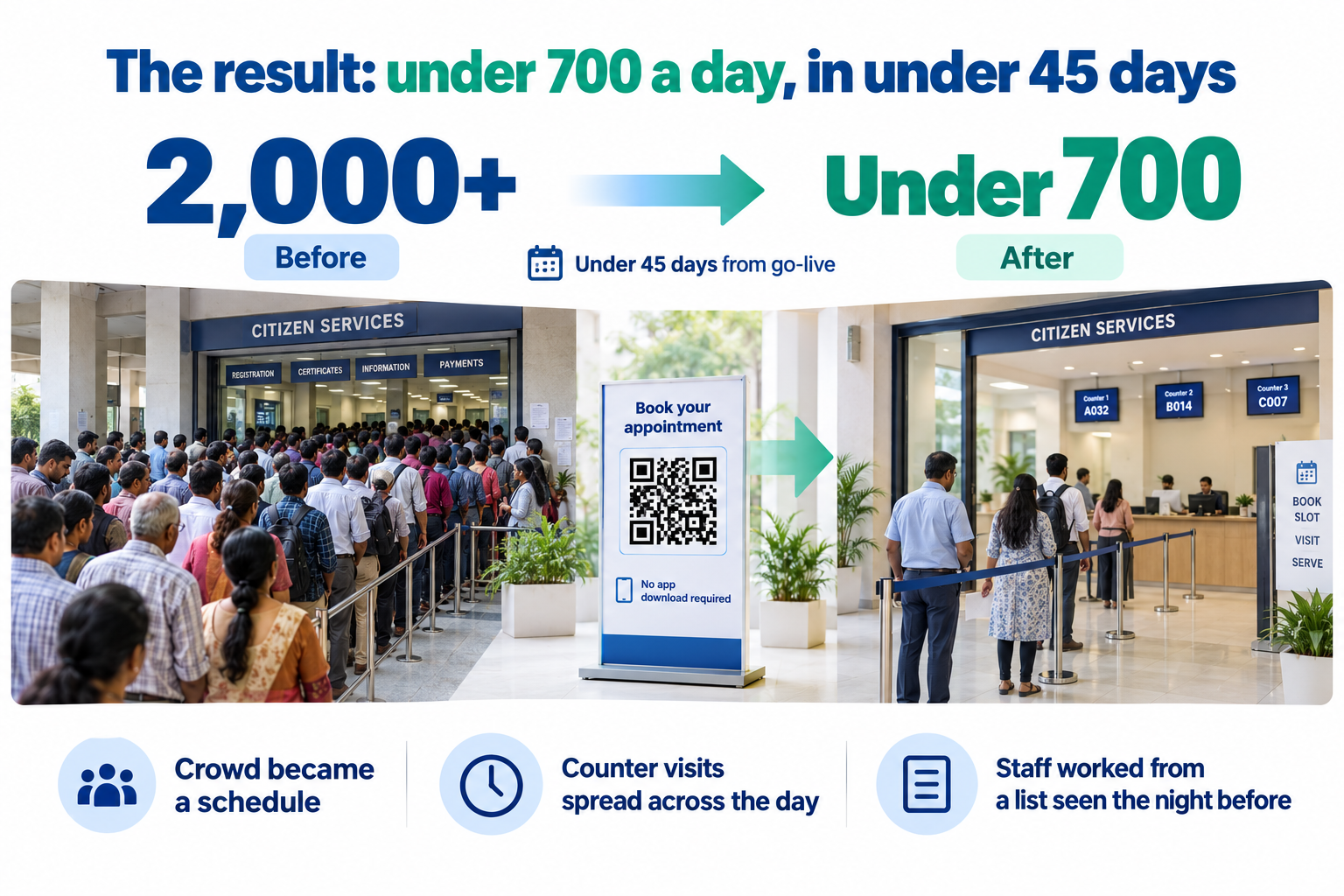
Daily footfall came down from 2,000+ to under 700. The change took under 45 days from go-live.
Those are the only two numbers in this story, and they are the two that matter. We publish nothing we cannot stand behind from our own delivery records, so there are no invented satisfaction percentages here, no estimated hours saved, no projected anything. Footfall 2,000+ before. Under 700 after. Under 45 days.
What the numbers mean operationally: the building stopped absorbing its day as one crowd. Citizens with counter work arrived against slots spread across the day. Visits that used to happen on spec, someone travelling in just to check on a status, began resolving without a trip, because booking a slot forces the question of what the visit is for. Staff worked from a list they had seen the night before.
And the speed matters as much as the size. Under 45 days means this was not a behaviour change campaign that paid off after a year. The no-install design removed the single step citizens refuse, so adoption was immediate, and the counter discipline described above did the rest. For context on how government digital projects survive beyond their pilot phase, we have written separately about how CSR-funded government pilots survive officer transfers.
What transfers to any high-footfall office
The client is a government organization, but nothing in the mechanics is government-specific. The pattern transfers to any building that absorbs a daily crowd:
Banks. Branch footfall has the same shape: a mix of transactions that need a counter and visits that only need an answer. Slot booking separates the two before the branch door.
Hospitals. OPD crowds are appointment problems wearing a healthcare badge. The same QR-to-slot flow, with no install barrier for patients and families, moves the queue from the corridor to the calendar.
Utilities. Billing counters and service centres surge around due dates. A forward view of demand lets the office staff for the surge instead of discovering it.
The common requirements are the ones this deployment proved: no app download on the public side, slot booking light enough for any phone, and an office-side view that turns bookings into staffing decisions. Our government and public sector practice runs on these patterns, and the product itself is sector-neutral.
If your building takes a crowd every morning, the question is not whether the approach applies. It is which counter conversation you need to win first.
Accucia's view
Footfall reduction is a process achievement that software makes possible, and any vendor who claims the software alone did it is telling you half the story. The QR flow removed the citizen's barrier, the AI layer gave the office a schedule worth defending, and the counter staff defended it. That division of labour, tool, visibility, discipline, is why the numbers moved in weeks rather than quarters, and it is the template we now carry into every high-footfall deployment.
If your office gate looks like this one did, message us on WhatsApp or reach us through the visitor management page and we will walk you through the deployment.
FAQ
What exactly changed at the government office in this case study?
Daily footfall of 2,000+ walk-ins fell to under 700 in under 45 days of deploying QR-based appointments with AI visitor management. Citizens book time slots through a browser page opened by scanning a QR code, with no app download, and the office works from a schedule instead of a crowd.
Why is the client not named?
The client is described only as a government organization in Maharashtra as a matter of policy. Government deployments carry sensitivities that private-sector case studies do not, so Accucia publishes the verified operational figures and the method while keeping the organization permanently anonymous.
Did reducing footfall mean citizens were denied service?
No. The reduction converted chaos into schedule. Citizens with counter work arrived against booked slots spread through the day, and visits that did not actually require a trip stopped happening on spec. The building served the same purposes with far fewer people standing in it at any moment.
Can the same approach work outside government offices?
Yes. Banks, hospitals and utility service centres share the same shape: a daily crowd mixing counter work with visits that only need an answer. The requirements that transfer are no app download for the public, slot booking that works on any phone, and an office-side view for staffing.
Reduce Queues with AI Visitor Management. Book a Free Demo!